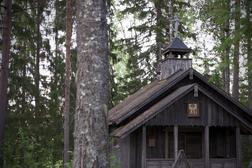
Cemetery

Monastery Cemetery

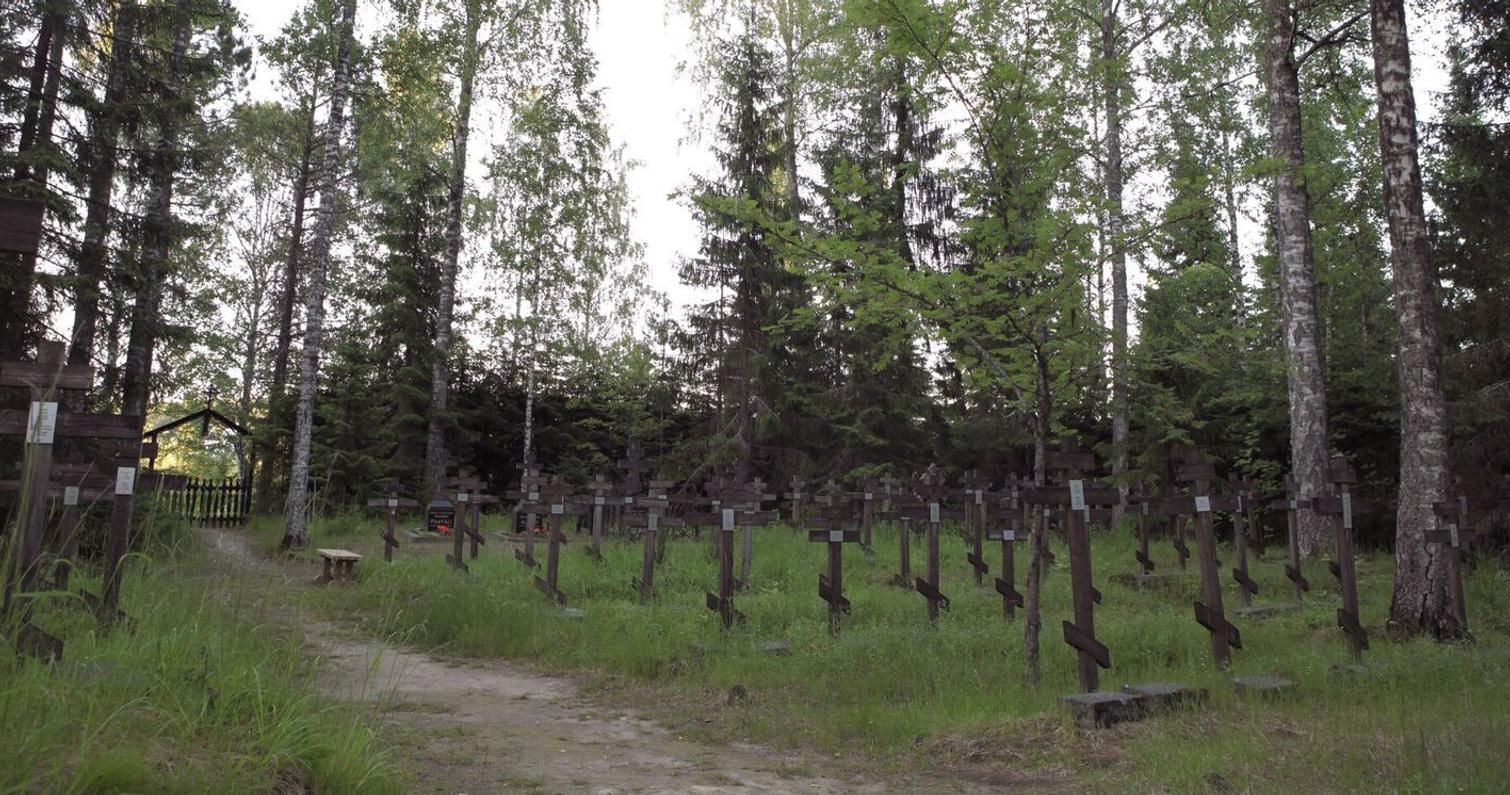
The crosses of the competitors resting in the cemetery and the stone slabs acquired in the 1960s tell in their own way about the competitor's life and the different degrees of monasticism.

The Russian-language slabs contain the words Servant of God, the competitor's name, his age at death, and often the number of years of competition. For those who know Russian, the monuments also tell whether the grave contains an obedience brother (novice), a robe bearer (half-monk), a monk, a schema or hermit monk, an abbot (head of a monastery) or an archimandrite (a distinguished head of a monastery or a priestly monk). In parishes, the title of archimandrite corresponds to the rank of abbot.

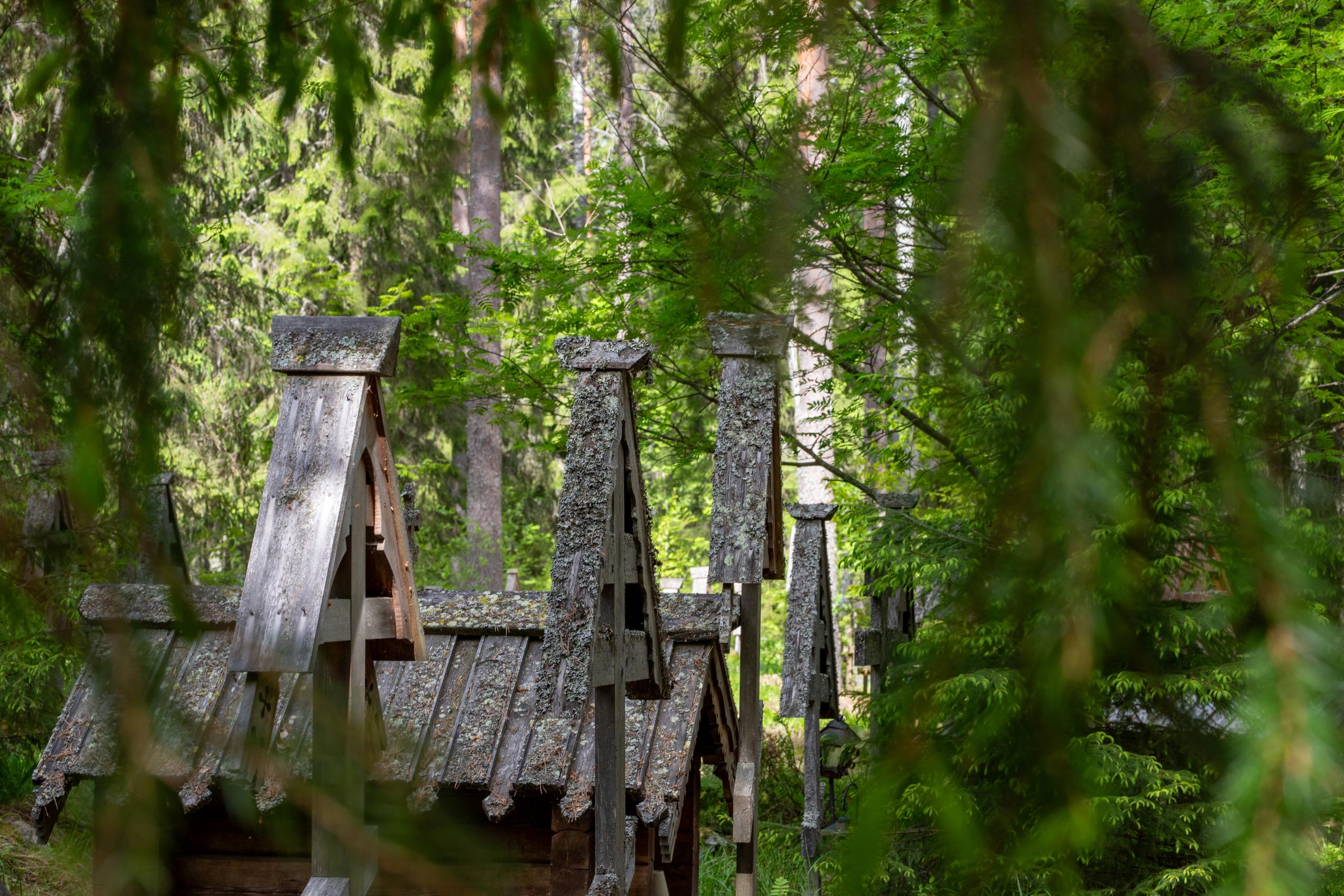
The grobu on some graves is a wooden grave monument found in Northern Russia and Karelia, for example, which was possibly built over a thousand years ago.

This narrow, two-meter-high structure made of logs and covered with boards is often decorated with elaborate wood carvings. In ancient times, the grobu could also serve as a place to store the body in winter, protecting it from wild animals until the grave could be dug. In Finland, old and new grobu can be seen, for example, at the Ilomantsi cemetery, Sevettijärvi, in Kalmosaari in Kuivajärvi, and at the Valamo monastery cemetery.

Bishop Mark

Bishop Markus (1910-1989) was originally from the Karelian Isthmus and was ordained a monk in Valamo, Lake Ladoga, in 1938. He served at the monastery, among other things, as a chaplain to Igumen Hariton. Father Markus, who served as a military chaplain during the war and then as a parish priest in various parts of Finland, moved to the United States, to San Francisco, in the 1950s. He was elected Bishop of Ladoga there in 1968. After retiring, Bishop Markus returned to Finland, where he also died and was buried in the cemetery of the Valamo Monastery, according to his wish.

Bishop Aleksi

Bishop Aleksi (1941-1984) was a deeply spiritual fore-pastor who had gathered a wealth of wisdom from a competitive life, having served as an assistant to the elderly brotherhood of Valamo since his youth. Bishop Aleksi, who was elected Bishop of Joensuu in 1980, died of a serious illness just a few years after taking office.

Brother Antti

Brother Andrei Peschkoff (1915-1991) was the last competitor of the brotherhood of the Konevitsa Monastery. In the summer of 1991, novice Andrei Peschkoff, known as Antt from Konevitsa, was able to visit his former home island for the first time in half a century and died shortly afterwards.

Pentti Saarikoski

The writer Pentti Saarikoski (1937-1983) spent the last years of his life in Valamo, without joining the Orthodox Church. He was buried in the cemetery of the Valamo Monastery at the request of his close relatives. The writer's grave has become a popular tourist attraction, through which many visitors also learn about the life of the monastery and the Orthodox Church.