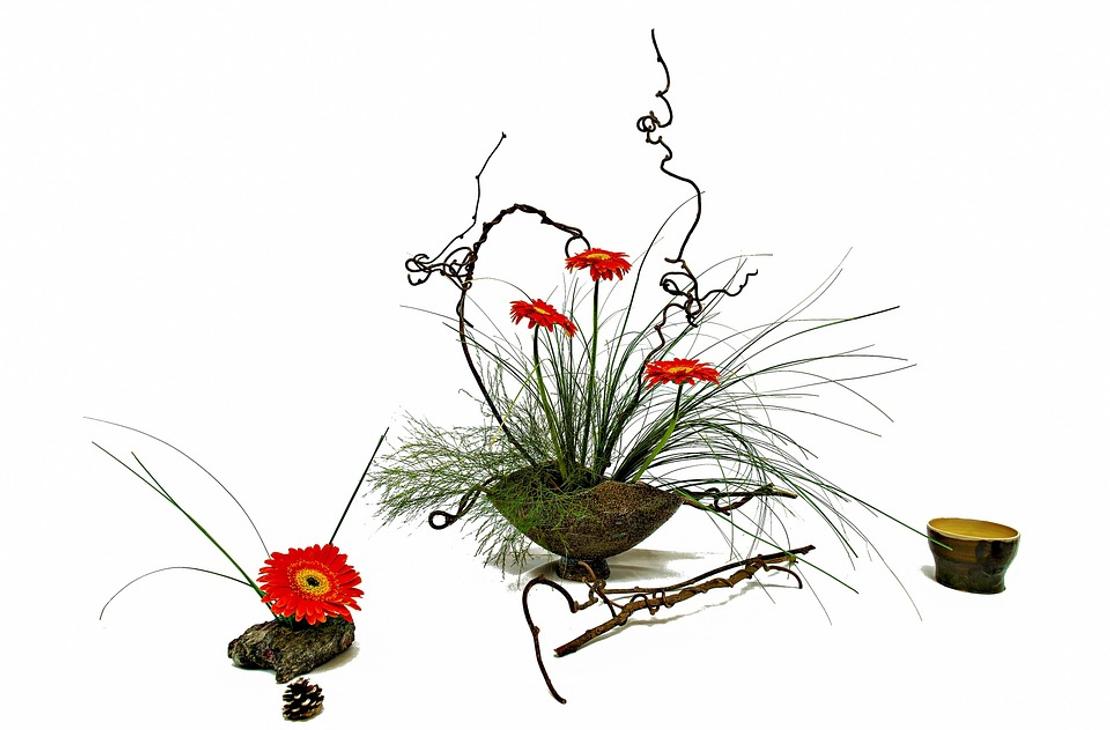
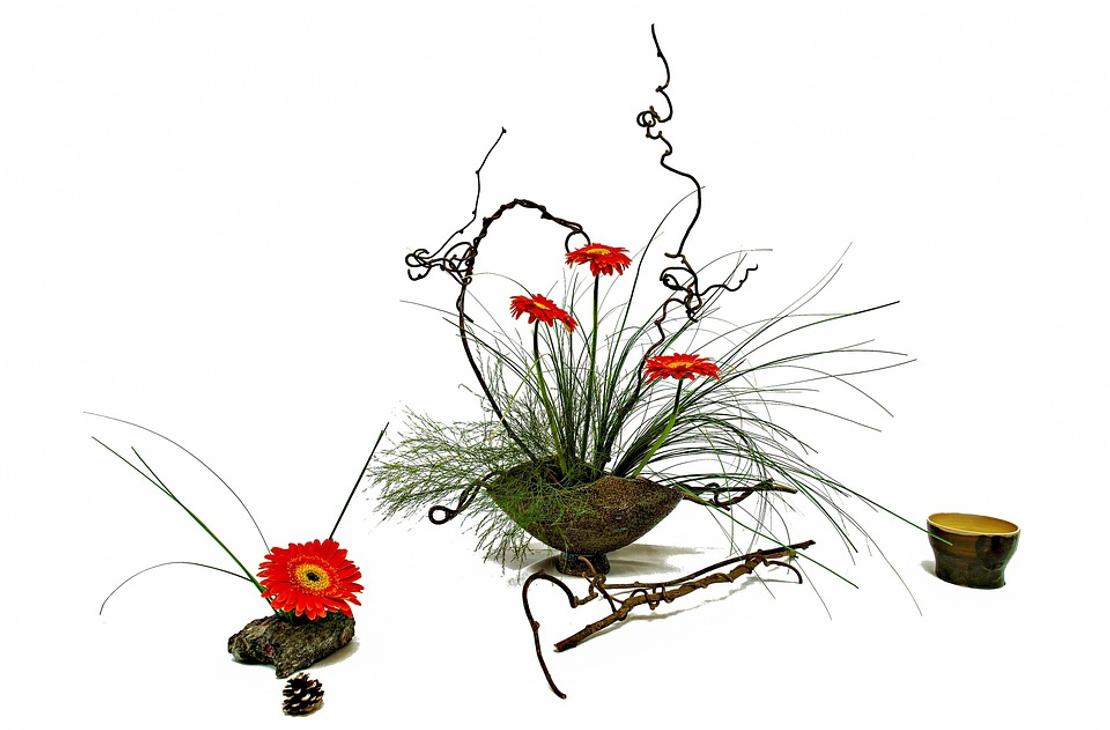
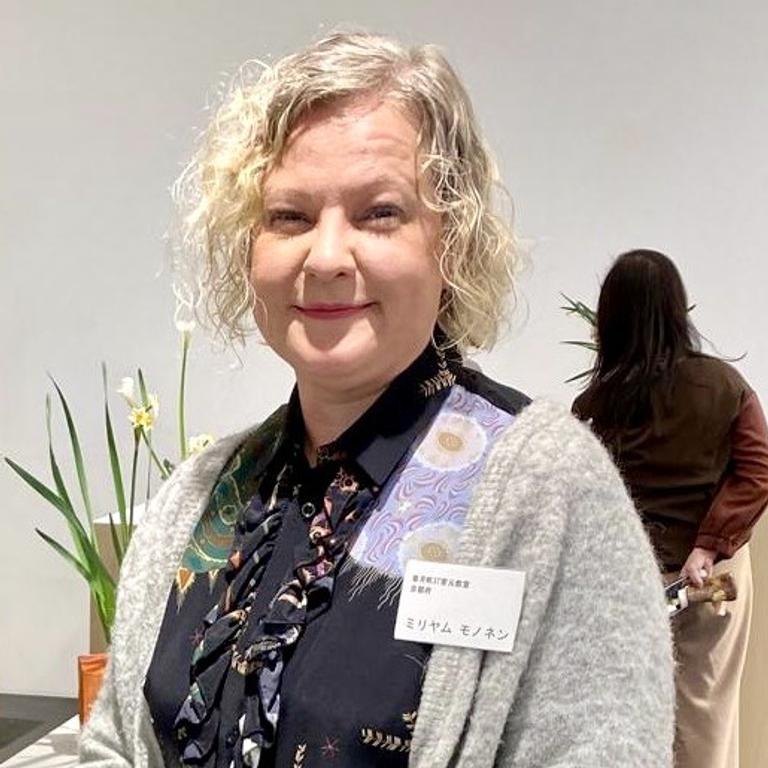
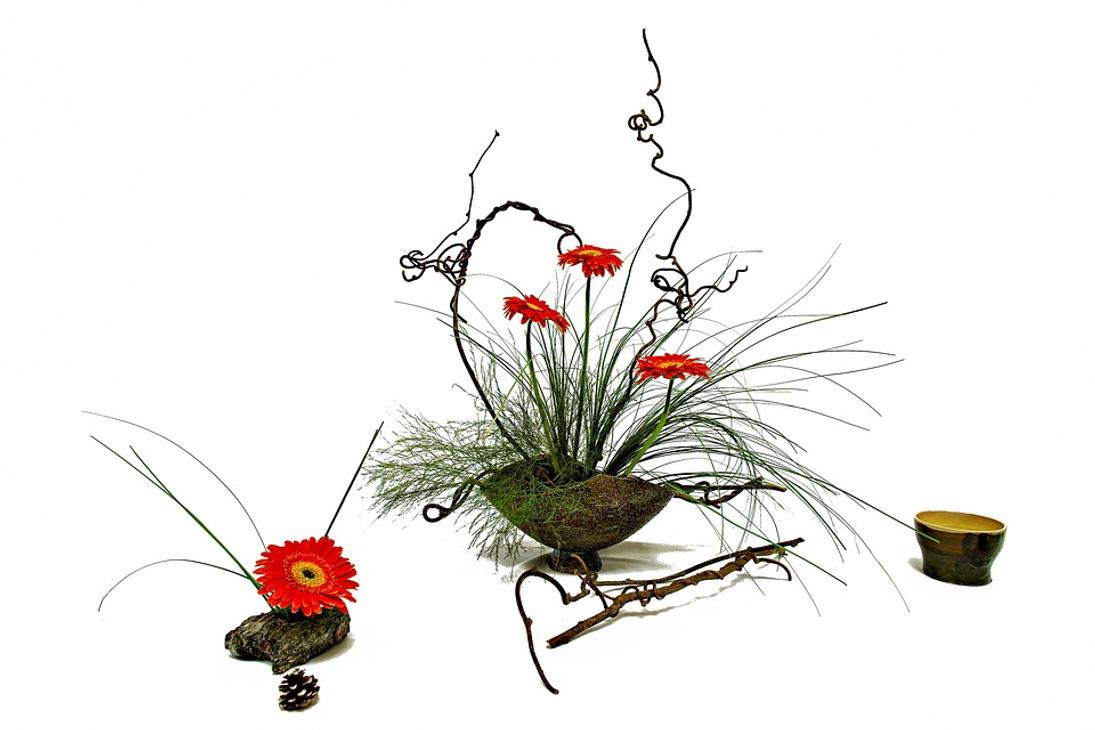
During the weekend, you will get to know the Japanese art of flower arrangement, ikebana. The course starts with the basics. We will explore ikebana's role in both Japanese history and contemporary life. We will also learn about the attitude of lifelong learning in Japanese culture and the appreciation of art and aesthetics in everyday life, following the seasons. In our instruction, we follow the curriculum of the modern Sogetsu school and learn basic techniques using various plant materials. In addition to basic arrangements, we will also practice creative work with free-style arrangements. The teaching methods of the course include the instructor's ikebana demonstrations, guidance on creating arrangements, and finally, a joint review of the finished arrangements, through which you will learn and gain inspiration from the works of other ikebanists. Despite working together, everyone works from their own starting points, following their own path as an artist. The goal is for you to be boldly inspired to express your creativity with plants and to learn basic techniques that will allow you to continue practicing ikebana at home. Through exercises, you will practically learn the essence and tension of ikebana's three basic elements – line, color, and mass – in arrangements and begin to view the surrounding nature and arrangements in a new way. To encourage you to boldly create arrangements at home, you can also practice making arrangements in vases found in your own home for your life's celebrations. For the course, you will need to bring branch shears, vases, branch material, and cut flowers, as well as note-taking materials. Tools are also available for loan from the instructor. Instructor: ikebana teacher Ruut Mononen. The language of instruction is Finnish.
The Epassi mobile application can be used as a payment method for this course.
CHECKLIST OF THINGS TO BRING.
- Small branch shears, or ikebana scissors
- A small cloth, with which you can clean e.g. scissors and the table
- Your own vases that you want to use. Bring at least one vase with which you will create a festive arrangement suitable for a special occasion on Sunday.
- Note-taking materials
- At least 6 branches (at least about arm's length. We will also look for these together during breaks around the college from nature, so it's good to have clothes and shoes suitable for walking outdoors).
- Flowers. At least 15 roses or chrysanthemums and 3 longer strong-stemmed flowers (these are good for practicing moribana and nageire when straight and sturdy-stemmed) and in addition, various flowers you would like to try, for example, for your Sunday festive arrangement.
- You can also bring plant leaves (slightly waxy-surfaced ones last well in arrangements).
You can ask the instructor for more information on materials to bring if needed (ruut.mononen@gmail.com)
Note: The schedule below is indicative according to the times, as the goal is to work at the students' pace. We will also take more breaks if necessary. However, the mentioned basic techniques will be learned during the weekend.
Friday 4.9.
Arrival, dining at café-Restaurant Trapesa
17.00–18.00 Weekend orientation. Introductory tour. Introduction to Sogetsu Ikebana and workstation preparation.
18.00 Ninth Hour, Vespers, Small Compline and Three Canons
19.30 Evening meal
20.00-21.00 Ikebana workshop. Moribana arrangement (1-1 Basic Upright Style Moribana).
Saturday 5.9.
6.00 Midnight Office, Matins and Liturgy
7.30 - Breakfast
9.00–10.30 Ikebana workshop. Moribana arrangement (1–2 Basic Upright Style Moribana with flowers).
10.30-12.00 Ikebana workshop. Nageire arrangement (1-3 Basic Upright Style Nageire & Tate-no-Soegi-dome support structure)
12.00–13.00 Lunch at café-Restaurant Trapesa
13.00-15.00 Ikebana workshop. Free Style Arrangement & Sketching (2-10 Free Style Arranging and Sketchin
Collecting material from nature.
15.30-17.00 Ikebana workshop. Nageire arrangement (1-10 Basic Slanting Style Nageire in Reverse & Jumonji-dome support structure)
17.00–18.00 Ikebana workshop. Table arrangement without water (2–16 Spreading Arrangement)
18.00 Vigil
19.30 Evening meal
Sunday 6.9.2026
Room check-out by 12:00 PM
7.30 Breakfast
9.00 Second Hour and Liturgy
10.30–12.00 Ikebana workshop. Arrangement in one's own vase for a celebration or special event (4-19 Specific Scenes, Occasions or Spaces)
12.00–13.00 Lunch at café-Restaurant Trapesa
13.00–14.00 Closing session. Reflection on what has been learned together, opportunity for discussion and questions, 'How to move forward with flowers as part of a lifestyle.'